
Learn how to use ChatGPT effectively with practical examples. Additionally, it covers better prompts, productivity tips, and common mistakes to avoid.
Have you ever asked how to use ChatGPT effectively and received an answer that felt too generic?
Moreover, you may wonder why others seem to get more out of it.
You are not alone.
Millions of people use AI tools to answer questions.
They write content, learn new skills, organize their work, and solve everyday problems.
However, many people wonder how to use ChatGPT effectively and only scratch the surface of what these tools can do.
Thus, the difference often comes down to one simple thing: how to use ChatGPT effectively when communicating with AI.
ChatGPT can help you understand difficult subjects, brainstorm business ideas, improve your writing, plan projects, and explore unfamiliar topics. However, the quality of its responses depends partly on the instructions and context you provide, as well as the model’s capabilities and limitations.
In this beginner-friendly guide, you will learn how to use ChatGPT more effectively, write better prompts, explore practical examples, and avoid common mistakes that can lead to disappointing results.
Whether you are a student, entrepreneur, professional, or simply curious about artificial intelligence, these techniques will help you make better use of the tool.
What Is ChatGPT and How Does It Work?

ChatGPT is an AI assistant developed by OpenAI. It can understand and generate natural language, answer questions, help with writing, explain concepts, assist with coding, and support many other tasks.
Instead of interacting with a computer exclusively through commands or menus, you can communicate with ChatGPT using ordinary language.
For example, you could ask it to explain a financial concept, help you organize a weekly schedule, or suggest ways to improve a piece of writing.
ChatGPT generates responses using patterns learned during training and the information available in the conversation and any tools or sources it can access. It does not automatically know every fact, and its answers can sometimes be incorrect or incomplete.
This is an important distinction: ChatGPT is a useful assistant, but it is not an infallible source of truth.
Understanding both its strengths and its limitations is the first step towards using it effectively.
1. Start With a Clear and Specific Request

One of the easiest ways to improve your ChatGPT experience is to make your requests more specific.
Imagine asking a person to help you with something but providing almost no information. They would have to guess what you need, what your goals are, and how you want the result presented.
ChatGPT faces a similar challenge when your instructions are vague.
Consider these two examples.
A vague prompt:
“Help me with marketing.”
A more effective prompt:
“I run a small online clothing business targeting men aged 18–30. Suggest five low-cost marketing strategies I can use to attract my first customers. For each strategy, explain the steps, estimated costs, and how I can measure the results.”
The second request gives ChatGPT a clearer understanding of the situation, the intended audience, the desired outcome, and the format of the answer.
This makes it easier to produce a relevant response.
When writing a prompt, ask yourself three questions:
- What exactly do I want ChatGPT to do?
- What information does it need to understand my situation?
- What would a useful answer look like?
You do not need to write complicated instructions. You simply need to communicate what you want clearly.
2. Give ChatGPT Context Before Asking for an Answer
Context helps ChatGPT understand the circumstances surrounding your request.
Without context, it may provide a general answer that does not fit your situation. With relevant information, it can produce suggestions that are better suited to your needs.
For example, suppose you want to start a business.
Instead of asking:
“Give me a profitable business idea.”
Try this:
“I’m a university student interested in entrepreneurship. I have limited starting capital and want to build a business that could eventually serve customers internationally. Suggest five business ideas that require relatively little initial investment. Explain the business model, target customers, main risks, and first steps for testing each idea.”
Notice how the additional details help define the problem.
You can provide context about your goals, available resources, experience, audience, preferred writing style, or any limitations you need to consider.
However, only share information that is relevant to the task. Avoid including passwords, confidential business information, or other sensitive personal data.
Practical tip: If the answer feels too generic, do not immediately start a new conversation. Give ChatGPT the missing information and ask it to improve its response.
3. Use This Simple Formula to Write Better ChatGPT Prompts
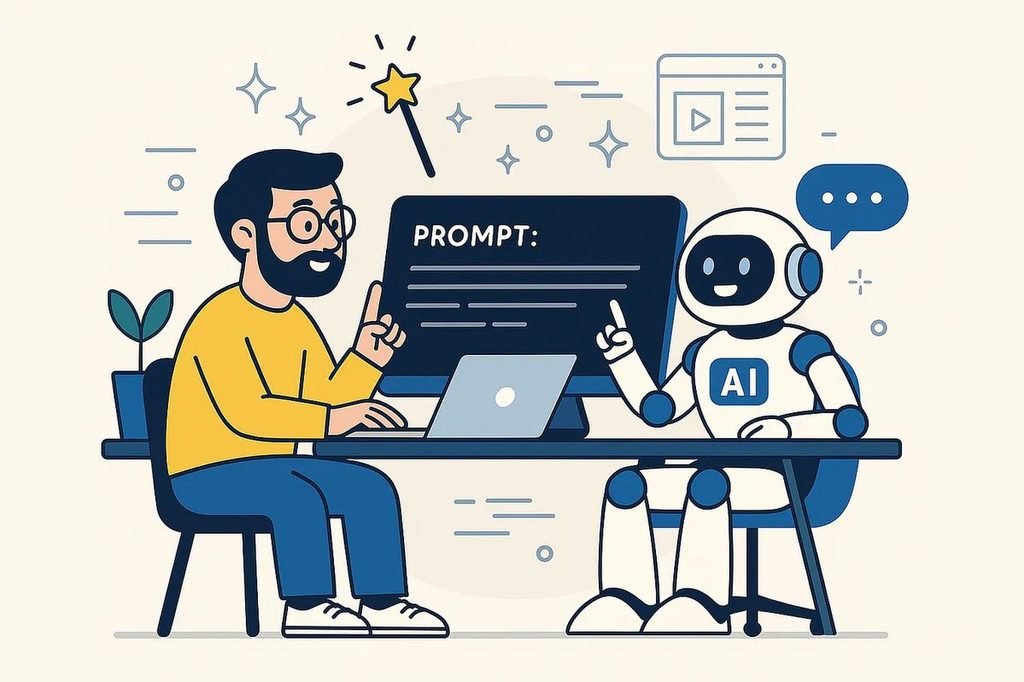
You do not need to become a prompt engineering expert to get useful results.
A simple framework can help you organize your instructions:
Role + Task + Context + Requirements + Output format
Here is what each element means.
- Role: The perspective or expertise you want the assistant to adopt.
- Task: The specific action you want it to perform.
- Context: The relevant background information.
- Requirements: The constraints, details, and standards it should follow.
- Output format: How you want the response organized.
For example:
“Act as a patient business management tutor. Explain the concept of break-even analysis to a beginner who has never studied accounting. Use a simple business example with realistic numbers, explain the calculation step by step, and finish with three practice questions. Use clear English and avoid unnecessary technical terminology.”
This prompt gives the assistant a defined role, a clear task, relevant context, specific requirements, and a preferred structure.
You can adapt the same formula to many different situations, from writing emails to learning a new language.
It is not a magic formula, and not every prompt needs all five elements. For simple questions, a single sentence may be enough.
4. Learn to Improve Your Prompts Through Follow-Up Questions
One of the most useful features of conversational AI is that you do not have to get everything right in your first message.
You can treat the initial response as a starting point and refine it through follow-up instructions.
For example, after receiving an explanation, you might say:
- “Explain that in simpler terms.”
- “Give me three real-world examples.”
- “Show me how to apply this step by step.”
- “What are the weaknesses of this approach?”
- “Compare the alternatives in a table.”
- “Review your answer and identify anything that might be inaccurate.”
This iterative approach can be particularly useful for complex tasks.
Imagine that ChatGPT gives you a business plan. Instead of accepting the first version, you can ask it to examine the financial assumptions, identify risks, challenge the pricing strategy, and suggest ways to test demand before investing money.
Each follow-up helps you investigate a different aspect of the problem.
However, asking ChatGPT to review its own work does not guarantee that it will identify every mistake. Important claims should still be checked against reliable sources.
5. Use ChatGPT for More Than Writing
Many beginners associate ChatGPT mainly with generating text. In reality, it can support a much wider range of activities.
Here are seven practical ways to use it in everyday life.
A. Learn Difficult Subjects
Learning something unfamiliar is rarely just a matter of memorizing definitions. Genuine understanding requires connecting ideas, recognizing patterns, applying concepts to different situations, and identifying the circumstances in which a particular explanation no longer applies.
This is where ChatGPT can become particularly useful.
Traditional learning resources are often designed to present information in a fixed sequence. A textbook, for example, may explain a concept in considerable detail, but a reader who struggles with one particular step must independently find another explanation or seek assistance elsewhere. ChatGPT offers a more interactive alternative: learners can ask questions about the specific points they do not understand, request alternative explanations, and explore the same subject from different perspectives.
Consider a student studying financial management. Memorizing the formula for a financial ratio is not necessarily enough to understand its practical significance. The student also needs to understand what the ratio measures, why businesses use it, what its limitations are, and how its interpretation changes depending on the circumstances.
ChatGPT can help develop this understanding by guiding the student through the concept, examining hypothetical business situations, and asking questions that require the student to apply what has been learned.
More importantly, the interaction can continue until the student identifies and addresses gaps in their understanding. Rather than receiving one explanation and moving on, the learner can investigate why a particular calculation works, what assumptions it depends on, and how the result should be interpreted.
This approach can also support independent learning. Someone interested in economics, programming, psychology, or another unfamiliar field can use ChatGPT to establish foundational knowledge before progressing towards more advanced material.
Nevertheless, AI-assisted learning should not be confused with guaranteed learning. An explanation that sounds convincing may still contain errors or omit important qualifications. Learners must also be careful not to mistake familiarity with an explanation for the ability to apply the underlying concept independently.
The strongest approach is to use ChatGPT to clarify difficult material, then test understanding through independent exercises, reliable educational resources, and practical application. OpenAI’s own guidance for students similarly emphasizes using AI to develop ideas and strengthen thinking rather than simply outsourcing academic work.
For example, a student struggling with economics could ask:
“Explain inflation as if I were a beginner. Start with a simple definition, give an example using household expenses, explain two causes of inflation, and finish with five questions to test my understanding.”
You can also ask it to create revision plans, practice questions, flashcards, and mock tests.
The best approach is to use it as a learning partner rather than simply copying answers. Ask questions, attempt exercises yourself, and request explanations when you make mistakes.
B. Improve Your Writing
Writing is often treated as a purely creative activity, but effective communication involves several distinct processes: organizing ideas, establishing a logical structure, selecting appropriate language, supporting arguments, and revising a draft until it communicates the intended message clearly.
ChatGPT can assist with these processes, making it useful for students, professionals, entrepreneurs, researchers, and content creators.
One important application is the development of an initial structure. Many people struggle to begin writing because they have information or ideas but cannot determine how to arrange them coherently. ChatGPT can help identify the central argument, organize supporting points, suggest a logical sequence, and identify areas that require additional evidence.
Once a draft exists, it can also help evaluate the relationship between paragraphs, identify unnecessary repetition, highlight ambiguous statements, and suggest ways to improve the flow of an argument.
These capabilities are particularly useful when the objective is not merely to make writing sound more polished, but to make the underlying message more persuasive and easier to understand.
For example, a business proposal may contain a promising idea but fail to communicate why the proposal deserves investment. Improving the vocabulary alone will not solve that problem. The writer must establish a convincing connection between the problem being addressed, the proposed solution, the expected benefits, and the evidence supporting the recommendation. ChatGPT can help examine these relationships and identify weaknesses in the presentation.
It can also help adapt communication to different audiences. An explanation intended for a technical specialist may require terminology and detail that would overwhelm a general reader. Similarly, a professional email, an academic report, and a marketing article have different expectations regarding tone, structure, and emphasis.
However, there is an important limitation. AI-generated writing can become repetitive, predictable, or excessively general when it is accepted without careful revision. It may improve grammatical fluency while weakening the individuality of the writer’s voice or introducing claims that have not been adequately supported.
For this reason, the most productive approach is to treat ChatGPT as an editorial collaborator rather than an automatic replacement for the writer. The writer remains responsible for the argument, evidence, accuracy, and final decisions.
For example:
“Review the email below. Make it professional but friendly, preserve my original meaning, remove unnecessary repetition, and keep it under 150 words.”
You can use this approach for business emails, reports, proposals, CVs, and other forms of communication.
Always review the final version to make sure it accurately reflects what you want to say.
C. Brainstorm Business Ideas

Entrepreneurship involves making decisions with incomplete information. Before launching a product, investing capital, or entering a market, an entrepreneur must consider customer needs, competition, pricing, distribution, operating costs, and the possibility that the original assumptions may be wrong.
ChatGPT can help organize this uncertainty into questions that can be investigated systematically.
One of its most useful applications is the preliminary evaluation of a business idea. Instead of immediately developing a marketing campaign around an attractive concept, an entrepreneur can use the tool to identify the assumptions on which the idea depends. These may include the existence of a sufficiently large customer group, customers’ willingness to pay, the feasibility of delivering the product, and the ability to compete with existing alternatives.
The tool can also help compare different business models, identify potential sources of revenue, develop customer profiles, and outline possible ways to test demand before committing significant resources.
Its value, however, goes beyond generating possibilities. ChatGPT can also be asked to challenge an idea by presenting counterarguments, identifying operational weaknesses, and examining scenarios in which the proposed strategy might fail.
This is particularly important because entrepreneurs can become attached to their own ideas. A tool used only to confirm an existing belief may reinforce that attachment rather than improve the quality of the decision. A more useful approach is to ask for both the strongest arguments in favor of an idea and the strongest reasons against pursuing it.
Nevertheless, ChatGPT cannot establish that a business opportunity is commercially viable simply by producing a detailed analysis. It may not have access to current local market data, and its estimates may depend on assumptions that have not been verified.
An entrepreneur should therefore use its output to guide further investigation rather than treat it as a substitute for customer interviews, competitor research, financial modeling, and real-world experiments.
Ultimately, ChatGPT is most useful in business planning when it helps entrepreneurs ask better questions, identify risks earlier, and organize the evidence required to make a decision.
Try this prompt:
“Suggest five online business ideas that solve specific problems for small businesses. For each idea, identify the customer, the problem being solved, a possible revenue model, the main competitors to investigate, and a low-cost way to test demand.”
The important part is what happens next.
AI-generated ideas are hypotheses, not proof that a business will succeed. You still need market research, customer feedback, competitor analysis, and financial calculations before making significant investments.
D. Organize Your Time
Productivity is often misunderstood as the ability to complete as many tasks as possible. In practice, it is more closely related to how effectively a person directs time, attention, and resources towards meaningful objectives.
Many people lose time not because individual tasks are particularly difficult, but because they must repeatedly decide what to do next, organize scattered information, manage competing priorities, and switch between unrelated activities.
ChatGPT can help reduce some of this organizational burden.
For example, it can help transform a collection of loosely defined responsibilities into a structured plan. By examining deadlines, dependencies, available time, and the relative importance of different tasks, it can propose a sequence of activities that is easier to follow and evaluate.
It can also support the preparation of meeting agendas, the organization of project requirements, the summarization of lengthy documents, and the development of standard operating procedures for recurring activities.
For small businesses, this may be especially useful. Owners often have to manage sales, customer communication, administration, marketing, and operations simultaneously. ChatGPT can help document processes, identify recurring tasks, and create initial versions of checklists or workflow instructions.
The important advantage is not simply that the tool can produce a schedule or a checklist quickly. It is that it can help make an otherwise disorganized process more explicit, allowing the user to identify missing steps, clarify responsibilities, and determine what deserves attention first.
However, a detailed plan is not necessarily a realistic one. ChatGPT may underestimate the time required for a task, overlook practical constraints, or recommend priorities that do not reflect the user’s actual responsibilities.
Its suggestions should therefore be evaluated against real deadlines, available resources, and changing circumstances. Productivity improvements also depend on execution: a well-organized plan has limited value if it is never implemented or reviewed.
Used thoughtfully, ChatGPT can help reduce the effort involved in organizing work while leaving the user responsible for setting priorities and ensuring that the resulting plan reflects reality. If you have classes, work, personal projects, and other responsibilities, ChatGPT can help you build a realistic schedule.
For example:
“Help me organize my week. I have classes from Monday to Friday, three personal projects, and approximately two hours of free time each evening. Create a flexible weekly schedule with study blocks, project work, breaks, and time for unexpected tasks.”
You can then adjust the schedule based on what is realistic for you.
E. Practice a New Language

Learning a language requires more than understanding grammar rules. Learners need repeated opportunities to interpret information, construct sentences, respond to questions, recognize mistakes, and adapt their communication to different contexts.
Finding these opportunities can be difficult, particularly for people who do not regularly interact with fluent speakers or who feel uncomfortable making mistakes in front of others.
ChatGPT can provide a flexible environment for language practice because the learner can initiate conversations, request explanations, and adjust the difficulty of the interaction.
For instance, a learner can practice professional conversations, simulate a job interview, discuss a familiar subject, or ask for explanations of grammatical errors. The interaction can be adapted to the learner’s level and objectives, allowing them to concentrate on specific weaknesses rather than follow a fixed lesson regardless of their needs.
Another advantage is the ability to explore why a particular expression may be more appropriate than another. Instead of receiving a correction without context, learners can ask about differences in meaning, tone, formality, and usage.
This can help them develop a more flexible understanding of language, particularly when preparing for professional or academic communication.
However, AI conversation should complement rather than replace exposure to authentic language. ChatGPT may occasionally produce unnatural expressions or fail to reflect regional usage accurately. Text-based practice also cannot fully develop pronunciation, listening comprehension, or the ability to interpret non-verbal communication.
Learners should therefore combine AI-assisted practice with reliable learning materials, authentic audio, reading, and conversations with other speakers whenever possible.
The objective is not simply to produce grammatically correct sentences, but to develop the ability to communicate effectively in situations that matter to the learner. ChatGPT can simulate conversations, explain grammatical rules, suggest vocabulary, and correct written exercises.
For example:
“Act as an English conversation partner. Ask me one question at a time about everyday life. After each answer, correct my major grammar mistakes, explain them briefly, and continue the conversation.”
This allows you to practice at your own pace.
For pronunciation, however, you may need a voice-enabled tool or other audio resources.
F. Generate and Develop Creative Ideas
Creative work often begins with uncertainty. A writer may know the subject of an article but struggle to identify an interesting angle. A business owner may need a campaign concept that distinguishes a product from competitors. A designer may understand the problem but remain uncertain about the best direction to explore.
ChatGPT can help address this initial difficulty by generating multiple possibilities and organizing them into distinct approaches.
Its usefulness is not limited to producing a larger number of ideas. It can help compare different creative directions, explore alternative interpretations of a problem, and identify opportunities that may not be immediately obvious.
For content creators, this can mean developing different arguments around the same topic rather than repeatedly publishing variations of an identical article. For marketers, it can mean exploring different customer motivations, campaign messages, and communication styles before choosing a direction to test.
The process becomes more valuable when idea generation is separated from evaluation. First, the user explores a range of possibilities without immediately rejecting them. Next, the options are assessed against relevant criteria, such as originality, audience relevance, feasibility, cost, and alignment with the intended objective.
This prevents the first plausible suggestion from becoming the default choice simply because it appeared quickly.
There is, however, a risk of confusing the quantity of ideas with originality. AI-generated suggestions may rely on familiar patterns, produce predictable combinations, or overlook cultural and contextual details that are essential to a particular audience.
Human experience, judgment, and experimentation remain central to creative work. The strongest results often emerge when people use AI to expand the range of possibilities and then contribute their own knowledge, perspective, and evaluation.
ChatGPT should therefore be understood as a tool for supporting creative exploration, not as a guarantee that the final idea will be original, effective, or successful. If you are creating content, planning a marketing campaign, or working on a personal project, ChatGPT can help you explore different approaches.
You might ask it to suggest article topics, social media campaigns, video concepts, brand names, or alternative ways to explain a difficult subject.
Rather than choosing the first suggestion, request several options and evaluate them against your objectives.
G. Understand Data and Solve Problems
Modern work frequently involves interpreting information rather than simply collecting it. A spreadsheet may contain hundreds of transactions, a report may include dozens of findings, and a project may involve several competing explanations for the same problem.
ChatGPT can help users organize this information, identify possible patterns, explain technical concepts, and determine which questions deserve further investigation. Depending on the tools available, it may also be able to analyze uploaded documents, work with structured data, generate code, or create visual representations of findings.
This can make analytical tasks more accessible to people who do not have extensive technical experience. A business owner, for example, may use data analysis capabilities to investigate sales trends without first having to develop an entire programming workflow.
Nevertheless, interpreting information requires more than identifying a pattern. A decline in sales may coincide with a price change, a seasonal effect, a supply problem, or a shift in customer behavior. Observing a relationship between two variables does not automatically establish that one caused the other.
The quality of an analysis also depends on the quality of the underlying data. Missing values, inconsistent categories, incorrect assumptions, and small samples can produce misleading conclusions even when the calculations themselves are correct.
For this reason, users should examine the assumptions behind an analysis, check important calculations, and distinguish between observed findings and possible explanations. When decisions have significant financial, legal, or operational consequences, independent verification becomes particularly important.
The greatest benefit comes from using ChatGPT to make information easier to investigate and understand, while retaining responsibility for determining what the evidence actually supports. Depending on the features available in your ChatGPT account, you may also be able to upload supported files, analyze spreadsheets, interpret charts, or work through calculations.
For instance:
“Analyze this sales spreadsheet. Identify the three products generating the most revenue, calculate the average monthly sales, and explain the main trends. Show the calculations and flag any missing data.”
Always verify important calculations and check that the uploaded information has been interpreted correctly.
6. Copy and Adapt These 10 ChatGPT Prompts
The following prompts are starting points you can customize for your own needs.
Prompt 1: Learn Anything Faster
“Act as a patient tutor. Teach me [topic] from beginner to intermediate level. Break it into manageable lessons, provide practical examples, ask me questions after each lesson, and adapt the next explanation to my answers.”
Prompt 2: Improve a Piece of Writing
“Review the following text for clarity, grammar, structure, and tone. Preserve my intended meaning, remove unnecessary repetition, and explain the most important changes you made. Text: [insert text].”
Prompt 3: Research a Business Idea
“Help me evaluate the business idea [describe idea]. Identify the target audience, problem being solved, potential competitors, possible revenue streams, major risks, and assumptions that need to be tested. Separate established facts from hypotheses.”
Prompt 4: Create a Study Plan
“Create a [number]-day study plan for [subject]. I can study [number] hours per day and need to prepare for [exam or objective]. Include daily topics, practice exercises, revision sessions, and checkpoints to measure progress.”
Prompt 5: Solve a Problem Step by Step
“Help me solve the following problem: [describe problem]. Break it into smaller steps, explain your reasoning in an understandable way, state any assumptions, and show how I can check the final result.”
Prompt 6: Generate Content Ideas
“Suggest 20 original content ideas about [topic] for an audience of [target audience]. For each idea, explain the reader’s problem, the main takeaway, and a possible title. Avoid repeating the same angle.”
Prompt 7: Prepare for an Interview
“Act as an interviewer for a [job or opportunity]. Ask me one question at a time. After each answer, give constructive feedback on clarity, relevance, and structure, then continue with a more challenging question.”
Prompt 8: Make a Difficult Concept Easier
“Explain [concept] using simple language, an everyday analogy, and two practical examples. Then explain where the analogy stops being accurate and ask me three questions to check my understanding.”
Prompt 9: Compare Different Options
“Compare [option A], [option B], and [option C] for someone who wants to [objective]. Evaluate costs, advantages, disadvantages, risks, and suitability. Identify which information needs current verification rather than guessing.”
Prompt 10: Challenge My Thinking
“Act as a critical thinking partner. Evaluate my idea: [describe idea]. Identify the assumptions behind it, the strongest arguments in its favor, the strongest counterarguments, potential blind spots, and evidence that would help me decide whether it is worth pursuing.”
You can save these prompts in a document and adapt them whenever you need them.
The goal is not to memorize perfect wording. It is to learn how to give an AI assistant enough information to help you achieve a specific outcome.
7. Common ChatGPT Mistakes You Should Avoid
Knowing what not to do is just as important as knowing how to write a good prompt.
Mistake 1: Accepting Every Answer as Fact
ChatGPT can generate incorrect information and present it confidently.
This matters when you are researching academic subjects, preparing financial calculations, making business decisions, or learning about technical topics.
How to avoid it: Ask for sources, check important claims against primary documents, and independently verify information that could materially affect your decisions.
Mistake 2: Giving Too Little Context
A question such as “What is the best business?” has no single answer that fits everyone.
The right option depends on factors such as available capital, skills, location, customer demand, and personal goals.
How to avoid it: Explain the circumstances that matter and define what success means for you.
Mistake 3: Using AI Without Reviewing the Output
AI-generated text can contain repetition, unsupported claims, awkward wording, and generic advice.
Publishing it without reviewing it can reduce the value of your work and undermine reader trust.
How to avoid it: Edit the content, verify the facts, add original insights, and make sure the final result genuinely answers the reader’s question.
Mistake 4: Trying to Solve Everything in One Prompt
Complex projects often involve multiple decisions and requirements.
Asking for an entire business strategy, detailed financial model, marketing campaign, and operational plan in one sentence can make it difficult to examine each part properly.
How to avoid it: Divide the project into smaller tasks and work through them in stages.
Mistake 5: Sharing Sensitive Information
You should be careful about including personal details, confidential company documents, passwords, or sensitive customer information in AI conversations.
How to avoid it: Remove unnecessary identifying information and review the privacy settings and data policies of the service you use.
Mistake 6: Treating AI as a Replacement for Your Own Judgment
AI can help you analyze options, but it cannot guarantee that a recommendation will succeed in the real world.
How to avoid it: Use its responses as input for your decision-making process. Combine them with your own knowledge, evidence, practical experience, and expert advice when appropriate.
8. Can ChatGPT Help You Become More Productive?
Yes, when you use it to improve a workflow rather than simply generate more information.
Consider a student preparing for an examination.

Without a clear process, the student might spend hours reading material without identifying the most important concepts or checking whether they understand them.
With ChatGPT, the student could:
- Identify the topics that need to be studied.
- Create a structured revision plan.
- Request explanations of difficult concepts.
- Generate practice questions.
- Attempt the questions without looking at the answers.
- Review mistakes and revisit weak areas.
The benefit comes from combining AI assistance with active learning.
The same principle applies to work and business. You can use ChatGPT to prepare an initial draft, organize research questions, create a checklist, or analyze possible solutions.
However, productivity is not measured by how much content you generate. It is measured by whether you achieve better results with your available time and resources.
9. Is ChatGPT Free to Use?
ChatGPT offers free access, although available features, usage limits, and model access can vary. Paid plans may provide additional capabilities or higher limits.
You can check the current options on the official ChatGPT website and consult the OpenAI Help Center for up-to-date information.
For beginners, the most important thing is to learn how to use the features available to them effectively before paying for additional access.
A paid plan is not automatically necessary for every user or task.
10. Frequently Asked Questions About Using ChatGPT
How do I use ChatGPT for the first time?
Visit ChatGPT, sign in or create an account if required, and enter your question or instruction in the conversation box. Start with a simple task, review the answer, and ask follow-up questions if you need clarification.
How do I get better answers from ChatGPT?
Be clear about your objective, provide relevant context, specify the type of response you want, and refine the answer through follow-up questions. Verify important factual claims independently.
What is the best way to write a ChatGPT prompt?
A useful prompt clearly describes the task, provides relevant context, specifies important requirements, and explains the desired output. More detail can help when the task is complex, but simple questions do not always need elaborate prompts.
Can ChatGPT make mistakes?
Yes. It can produce inaccurate facts, flawed calculations, incomplete explanations, or references that do not support the claims being made. Check important information against reliable sources.
Can I use ChatGPT to study?
Yes. You can use it to explain concepts, generate practice questions, organize revision, and receive feedback on your answers. You should still follow your institution’s academic integrity rules and make sure you understand the material yourself.
Can I use ChatGPT to make money?
ChatGPT can assist with activities such as content creation, research, marketing, coding, and business planning. However, using it does not guarantee income. Results depend on the value you provide, market demand, your skills, and how effectively you execute your plans.
Should I always use long prompts?
No. The best prompt is one that gives enough information for the task. A straightforward factual question may need only one sentence, while a complex project may require detailed instructions and several follow-up conversations.
Is ChatGPT better than Google Search?
They serve different purposes. ChatGPT is useful for explanations, brainstorming, drafting, and interactive problem-solving. Google Search is useful for discovering websites, locating primary sources, and checking current information. Depending on your task, using both can be more effective than relying exclusively on either one.
Final Thoughts: Learn to Work With AI, Not Just Ask It Questions
ChatGPT becomes more useful when you stop treating it as a box that produces answers and start treating it as a tool for working through problems.
Give it context. Explain what you want to achieve. Ask for examples. Challenge its suggestions. Refine the results. And, most importantly, verify the information that matters.
You do not need to master every AI technique to get started. Choose one task you regularly struggle with and experiment with the methods in this guide.
Once you understand how to communicate your needs effectively, you can apply the same skills to studying, writing, business, research, and many other areas of everyday life.
Your next step: Open ChatGPT and choose one real problem you want to solve today. Write a clear prompt, review the response, and improve it with a follow-up question. That simple habit is a practical starting point for becoming a more effective AI user.
Sources and Further Reading
The following official resources were consulted to ground this article in published guidance. They are listed so readers can verify the information and explore the subject further.
- Google Search Central — Google. Creating Helpful, Reliable, People-First Content.
https://developers.google.com/search/docs/fundamentals/creating-helpful-content - Google Search Central — Google. SEO Starter Guide.
https://developers.google.com/search/docs/fundamentals/seo-starter-guide - OpenAI Help Center — OpenAI. Prompt Engineering Best Practices for ChatGPT.
https://help.openai.com/en/articles/10032626-prompt-engineering-best-practices-for-chatgpt - OpenAI Help Center — OpenAI. How Do I Create a Good Prompt for an AI Model?
https://help.openai.com/en/articles/4936848-how-do-i-create-a-good-prompt-for-an-ai-model - OpenAI — Official website. ChatGPT.
https://chatgpt.com/
Article prepared by Aivora.